
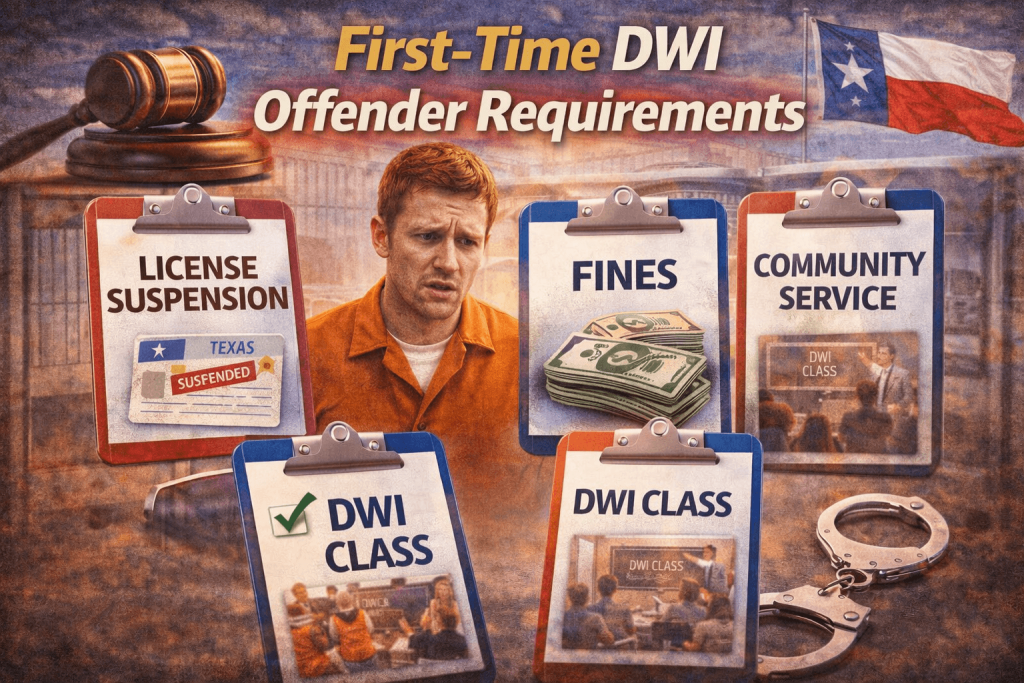
If you’ve been captured for driving while drunk for the first time, you’re probably wondering what comes next. Comprehending the needs of first-time DWI offenders in Texas is important to avoid further fines and complete your legal obligations.
Texas handles DWI offenses seriously, actually for first-time offenders. While fines may be less stringent than repetitive offenses, there are still several compulsory conditions, including damages, classes, and probable license suspension.
In this blog post, we break down everything you must know about first-time DWI conditions in Texas.
What Is Considered a First-Time DWI in Texas?
A first-time DWI crime happens when someone is noticed operating a motor vehicle with a blood alcohol concentration (BAC) of 0.08% or higher, or while impaired by alcohol or drugs.
Actually, without a high BAC, you can still be arrested if law enforcement decides that your normal mental or physical capabilities are impaired.
Legal Fines for First-Time DWI Offenders
The results for a first-time DWI in Texas can vary, depending on the case, but commonly contain:
- Penalties up to $2,000
- Jail duration ranging from 3 to 180 days
- Driver’s license suspension for up to 1 year
- Annual surcharge or reinstatement fees
In some cases, the court may suggest probation (community control) rather than a jail period, especially for first-time offenders.
Required DWI Education Program
One of the most standard requirements is meeting a Texas DWI Education Program, which is supported by the Texas Department of Licensing and Regulation (TDLR).
Key Details:
- Time: 12 hours
- Required for most first-time offenders
- Must be completed within a court-ordered timeframe (often 180 days)
The program teaches:
- The risks of driving
- Texas DWI laws
- Strategies to deter future violations
Failure to satisfy the course can result in license suspension or extended probation.
Driver’s License Suspension and Reinstatement
A first-time DWI conviction often results in a driver’s license suspension. The altitude of suspension counts on aspects such as BAC level and whether you denied a breath or blood test.
To reinstate your license, you may be required to:
- Satisfy the DWI education program
- Pay reinstatement fees
- Provide proof of insurance (SR-22)
Some individuals may be eligible for an occupational (determined) license, which allows limited driving for work or important objectives.
Probation Conditions
Many first-time criminals are set on probation rather than serving jail time. Probation comes with specific requirements that must be followed carefully.
Standard probation requirements contain:
- Conducting a DWI education class
- Completing community service hours
- Following alcohol or drug counseling
- Avoiding alcohol and drugs
- Frequent check-ins with a probation officer
Disobeying probation terms can result in additional penalties or jail time.
Installation of Ignition Interlock Device (IID)
In some circumstances, the court may need you to install an ignition interlock device (IID) in your car. This device stops your car from starting if alcohol is detected on your breath.
While it is not yet mandatory for first-time criminals, it may be required if:
- Your BAC was extremely high
- The court believes it essential for safety
Additional Costs and Consequences
Further fines and legal fines, a first-time DWI can have long-term financial and personal effects.
These may include:
- Increased car insurance premiums
- Permitted fees and court costs
- Loss of job opportunities
- Permanent criminal record
Understanding these results can help emphasize the significance of satisfying all requirements correctly.
Why Alamo Center?
At Alamo Center, we are committed to helping you with DWI in Texas. A DWI situation can feel overwhelming, but taking timely action and completing required steps responsibly can make a real difference. If you or somebody you know needs DWI classes or guidance after an arrest, Alamo Center is available to provide the required education and support to help you get back on track.