
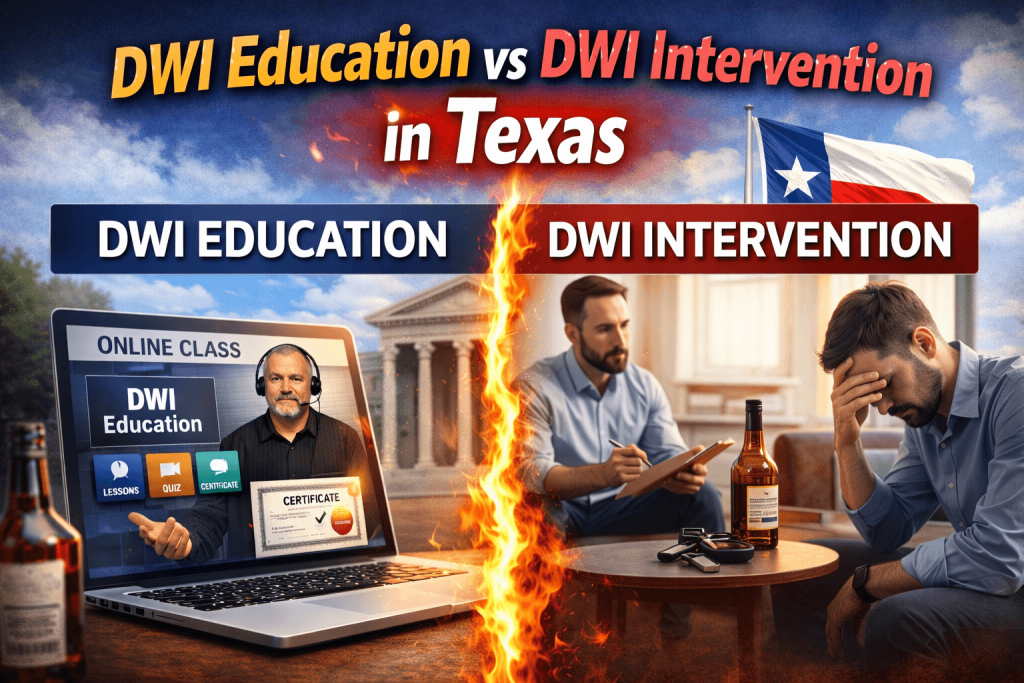
If you have lived in Texas, you really know there are strict laws of driving in texas but remember don’t ever drive if you are are drunk becuase if you are drunk while driving texaa police charged you with a Driving While Intoxicated (DWI) offense in Texas, after charged there one of the most confusing parts of the process is understanding the difference between a DWI Education Program & DWI Intervention Program. At first peek, they may sound identical. In fact, they fit different legal purposes, apply to different levels of crimes, and hold different long-term implications.
Understanding the difference is not just a case of compliance. It can impact your driver’s license status, your criminal history, and even your future career opportunities.
This principle breaks down the differences obviously and professionally, so you can make informed decisions.
Understanding DWI in Texas
Texas DWI crimes are controlled by state law and usually need court-ordered participation in typical programs. These programs are developed not only as a penalty, but as restoration tools to facilitate repeat offenses.
Depending on whether this is your first DWI crime or your next crime, the court may order one of two programs:
- DWI Education Program
- DWI Intervention Program
The discrepancy lies especially in the harshness of the crime and the defendant’s prior history.
What Is a DWI Education Program?
A DWI Education Program is generally directed at someone convicted of a first-time DWI crime in Texas.
Goal
The purpose of DWI Education is prevention. It is developed to:
- Educate criminals about the dangers of alcohol and drug impairment
- Present Texas DWI laws and legal matters
- Encourage responsible decision-making
- Lower the possibility of future crimes
Program Design
Most DWI Education courses in Texas:
- Are 12 hours long
- Must be finished within a court-ordered timeframe
- Are provided by programs approved by the Texas Department of Licensing and Regulation (TDLR)
Parties learn about:
- The physiological results of alcohol and drugs
- Blood alcohol concentration (BAC) levels
- How impairment concerns judgment and response time
- Economic and legal matters of DWI
Who Generally Needs It?
Your choice will most probably be ordered to complete DWI Education if:
- It is your first DWI conviction
- You are qualified for probation
- The court does not believe you a repeat criminal
Effects of Not Completing It
Failure to conduct a DWI Education Program can result in:
- Driver’s license suspension
- Violation of probation
- Other legal penalties
For first-time criminals, this program is normally thought of as corrective rather than punishing.
What Is a DWI Intervention Program?
A DWI Intervention Program is an additional intensive program that is commonly required for people with multiple DWI convictions.
Goal
Unlike DWI Education, which concentrates on understanding, DWI Intervention manages behavioral habits and substance misuse danger factors.
The objective is not just education, it is behavioral transformation.
Program Design
DWI Intervention Programs in Texas:
- Require at least 32 hours of education
- They are additional, in-depth, and structured
- Usually contains screening and assessment components
Parties may engage in:
- Substance abuse evaluations
- Group counseling discussions
- Risk assessments
- Relapse prevention strategies
Who Generally Needs It?
You may be required to satisfy DWI Intervention if:
- You have a double or subsequent DWI conviction
- You are considered at high risk for repeat violations
- The court decides that education alone is insufficient
Legal and Practical Importance
Because DWI Intervention is connected to repeat violations, it holds greater importance:
- Courts treat it as part of a repair provision
- It may affect sentencing decisions
- It can affect prospective legal proceedings
Failure to complete a DWI Intervention program can result in severe punishments, including extended probation violations or imprisonment.
Why This Difference Matters
Many people undervalue the importance of understanding which program they need to complete.
Here is why it matters:
1. License Reinstatement
Texas people completing the necessary program are often required for:
- License reinstatement
- Occupational license eligibility
- Compliance with probation
Submitting the incorrect certificate or registering with a non-approved provider can delay your reinstatement.
2. Illegal Record Imports
While both programs are educational in nature, living ordered to complete DWI Intervention signals a repeat violation. That difference can affect:
- Background checks
- Work opportunities
- Professional licensing reviews
3. Insurance Rates
Repeat DWI violations generally result in much higher insurance premiums. Completing the intervention does not obliterate the crime, but it indicates compliance with court orders.
4. Court Compliance
Courts in Texas handle deadlines seriously. Delayed completion may result in:
- Revoked probation
- Other fines
- Extended monitoring
Understanding your condition helps you avoid excessive difficulties.
Conclusion
If you are meeting a DWI-related condition in Texas, transparency is your most powerful asset.
Understanding whether you require DWI Education or DWI Intervention helps you:
- Remain respectful with court orders
- Avoid other penalties
- Restore your driving privileges
- Save your experienced future
The distinction between the two is not just the number of hours in a classroom. It takes into account how the court evaluates your case record and your risk profile.
Why Alamo Center
At Alamo Center, we are committed to helping you with DWI in Texas. A DWI situation can feel overwhelming, but taking timely action and completing required steps responsibly can make a real difference. If you or somebody you know needs DWI classes or guidance after an arrest, Alamo Center is available to provide the required education and support to help you get back on track.