
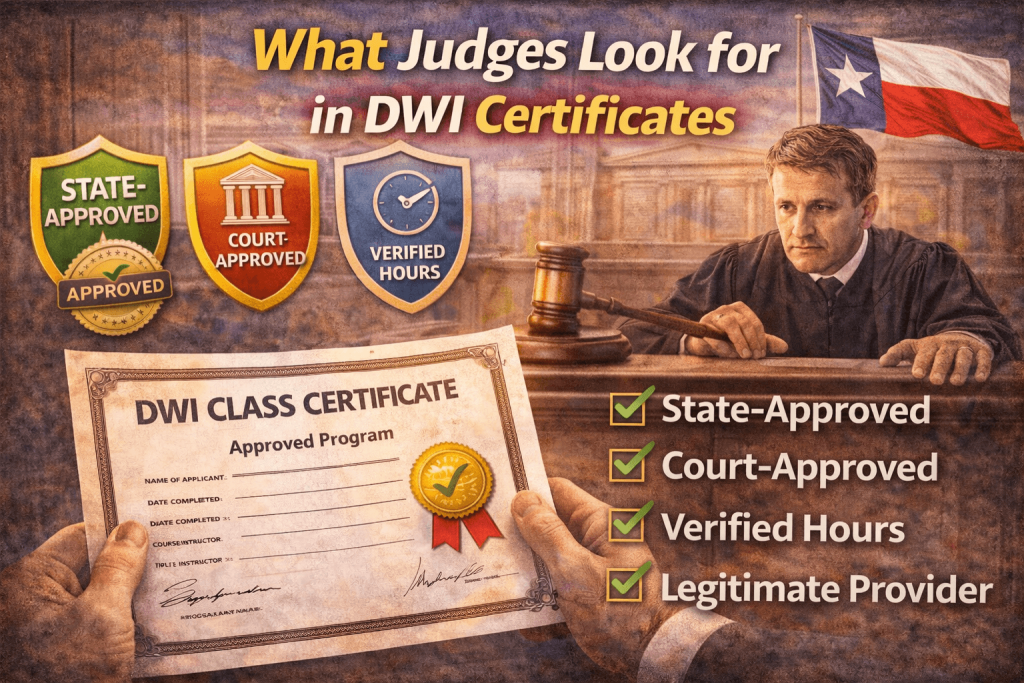
If you’ve completed a DWI education or intervention program, submitting your DWI certification of completion is a necessary step in completing court conditions. However, many people don’t acknowledge that magistrates carefully check these credentials before accepting them.
Comprehending what magistrates look for in DWI certifications can help you avoid rejection, delays, or other legal issues. In this blog post, we explain the key factors reviewers consider and how to secure your certification to meet all requirements.
Why DWI Certificates Matter in Court
A DWI certification confirms that you have completed a court ordered education or intervention program. Magistrates rely on this document to ensure that you have fulfilled an essential part of your legal responsibilities.
If your certification is invalid or incomplete, the court may:
- Reject it
- Require you to retake the class
- Slow your case resolution
- Extend probation or charge additional penalties
This is why submitting a valid and correct certification is essential.
1. TDLR Authorization of the Program
The first and most essential thing magistrates verify is whether the class provider is approved by the Texas Department of Licensing and Regulation (TDLR).
Only TDLR approved DWI programs are identified by Texas courts. If your certification comes from a non-approved provider, it will almost always be rejected.
What Magistrates Verify:
- Provider name checks an authorized list
- Official license or certification number
- Program type (DWI Education or Intervention)
Tip:
Always confirm approval before enrolling in any class.
2. Completion of Essential Hours
Magistrates also verify whether you have satisfied the required number of hours for your specific program.
Legal Requirements:
- 12 hours for DWI Education Program (first-time offenders)
- 32 hours for DWI Intervention Program (repeat offenders)
If your certification shows fewer hours, it will not be accepted by the Texas court.
Alert:
Certifications from “fast-track” or shortened courses are often rejected.
3. Accuracy of Personal Information
Your certificate must include accurate personal details. Even small errors can cause problems.
Magistrates Look For:
- Proper full legal name
- Matching information with court records
- Accurate identification details
If your name is misspelled or doesn’t match official documents, the court may examine its validity.
4. Authorized Certificate Format and Details
A valid DWI certification must include specific information to be considered honest.
Required Details:
- Offender’s full name
- Course title and type
- Total hours completed
- Completion date
- Provider’s name and license number
- Authorized signature
Ignoring any of these elements can result in rejection.
5. Proof of Legitimate Participation
Magistrates want to ensure that you actually finished the course, not just received a certification.
They May Believe:
- Attendance logs
- Participation tracking (for online classes)
- Educator verification
Programs that lack valid tracking or verification systems may not be trusted.
6. Timely Completion
Timing is another important aspect. Most courts need you to satisfy your DWI program within a specific deadline, often within 180 days.
Magistrates Check:
- Whether the course was completed on time
- If it aligns with probation or court orders
Late submissions may lead to fines or additional requirements.
7. Compliance With Court Orders
Every DWI case is different, and magistrates hope you to follow exact court instructions.
Examples:
- Conducting a specific type of program
- Using an authorized provider
- Presenting the certificate to the correct authority
Even if your certification is valid, it may be rejected if it does not match your court order.
Standard Reasons Certificates Get Rejected
Understanding common mistakes can help you avoid them.
Top Reasons for Rejection:
- Non-TDLR-approved provider
- Incomplete course hours
- Incorrect personal details
- Fake or scam certificates
- Missing required information
- Late submission
Avoiding these points ensures a smoother legal process.
Why Alamo Center?
At Alamo Center, we are committed to helping you with DWI in Texas. A DWI situation can feel overwhelming, but taking timely action and completing required steps responsibly can make a real difference. If you or somebody you know needs DWI classes or guidance after an arrest, Alamo Center is available to provide the required education and support to help you get back on track.